
By all available indications, the White House drafted a face-saving note and handed it, ready-made, to Islamabad. Pakistani Prime Minister Shehbaz Sharif was supposed to then post it in the guise of a plea urging Trump to extend the deadline by two weeks 'to allow diplomacy to run its course'. Trump would then graciously accept Pakistan's 'request' and declare a ceasefire. Sharif dutifully posted the message on X. Except that he, or whoever was handling the account, forgot to delete the tell-tale first line visible in the edit history: 'Draft - Pakistan's PM Message on X'. Prem Panicker's must read blog on the Iran War.
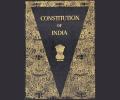
India's Constitution is far more than a supreme legal framework for ideal governance. It is a living chronicle.
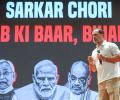
'Rahul Gandhi's problem is that he doesn't think big.' 'He looks more like an activist, while politics is like a game of chess. You attack and then defend and have a game-plan.'
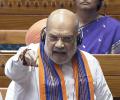
'Anyone they don't like can be potentially arrested and thrown in jail for 30 days to induce regime change.'

BlueKraft has published The Emergency Diaries -- Years that Forged a Leader to chronicle Modi's role in the underground campaign during that period, after speaking to a number of people associated with him at that time.
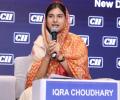
From royalty to a tea vendor-turned-politician's wife and from a first lady to a Bengali actress, the 18 Muslim women who treaded the hallowed corridors of power in the Lok Sabha are an eclectic mix, with each of them having an interesting backstory, but one common thread -- their path to power was always strewn with struggle and hurdles.

Amid this unrest came the verdict of the Allahabad high court on June 12, 1975 that found Gandhi guilty over discrepancies in the electoral campaign, which led to the Emergency on the night of June 25.
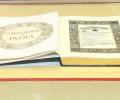
'The time has come to have a relook at the Constitution as every document has a shelf life.'
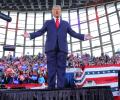
'To everyone voting for Trump, I have only this simple question: Would you let him have lunch with your daughter or sister or wife or mother?' 'Then why would you let him have our lunch (and so much more) for four more years?', asks Sree Sreenivasan.

'These include economic prosperity, a promising future for youth, empowerment for women, a thriving society, robust healthcare, quality education, elevated living standards, agricultural prosperity, and robust social security coupled with effective governance.'

Ahead of this election, the alliance between the BJP and the SKM had broken down. One reason is the fear that like Article 370, Article 371F might also be changed.
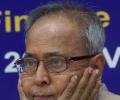
'The Presidential Years' would be the fourth to be authored by Mukherjee, who passed away on Monday at the R&R hospital at the age of 84.
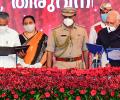
CPI-M veteran Pinarayi Vijayan, who led the Left Democratic Front (LDF) to an unprecedented consecutive victory in the April 6 assembly polls, on Thursday took oath as chief minister of Kerala for the second time along with 20 ministers.

Parliament and state legislative assembly are regarded as 'sacred places' and there can be no place for disorderly conduct in the House, where members are expected to show statesmanship and 'not brinkmanship,' the Supreme Court said on Friday.

Warren urged India to respect the rights of the people of Kashmir.

The United States State Department took the unprecedented step to shut down its entire unclassified email system over the weekend after its computer network was hacked.
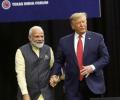
'What has India got out of Howdy India in substantive terms?' asks Ambassador M K Bhadrakumar.

Kamala succeeded as she identified herself with the larger minority groups rather than narrow ethnicity, prodded by her mother who did not want to return to India, observes Ambassador T P Sreenivasan, who has done multiple stints in India's embassy in Washington, DC.

Surprisingly, Jeff Bezos is the new entrant to the list and ends up holding the first position.

Backed by top IT companies of the Silicon Valley, Indian-American Rohit "Ro" Khanna hopes to get second-time lucky in his effort to enter the US House of Representatives against Democratic Party's sitting lawmaker.
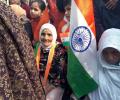
'Shaheen Bagh is no longer a mere ghetto of lower middle class Muslims.' 'Now, it is a metaphor for resistance, secularism and struggle,' notes Md. Zeeshan Ahmad.

Why did Kamal Haasan name the leaders he did?

'Trump's desecration of all that Obama represented can be seen at different levels: Personal, political, systemic and structural,' explains Ambassador B S Prakash.

'If only Cariappa/Thimayya/Chaudhari/Manekshaw were given a free hand, there'll be no PoK, the Chinese would have been taught a lesson, 1965 would have slain the Pak demon and in 1971 just another fortnight's fighting after Bangladesh and West Pakistan would have been occupied.' 'No authoritative military account suggests anything remotely like any of these...' '...Chronologies, names, even periods get mixed up, but, never mind, because the point -- strong Army denied by cowardly Congress -- is made.' 'This is where Modi is coming from,' points out Shekhar Gupta.

The middle class's long push to force the state to retreat from the economy may be reversing, says Ajit Balakrishnan.

According to all accounts, Neel Tushar Kashkari was well received at the California Republican Party Convention -- his first major public exposure after formally declaring his candidacy in January for governor of California

From Aurangzeb to Sangh Parivar, the year 2016 offers plenty of hope in historical and modern literature.

Why, centuries after the French Revolution promised an end to feudalism, do political dynasties persist -- even in democracies, asks Ajit Balakrishnan.
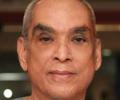
And then we are in our mid-60s and a time of reckoning with one's life - if one believes in Erikson.

Ajit Balakrishnan recalls some lessons from the last time people talked of 'convergence' -- the mid-1990s.

Here is a closer look at politicos who have emerged victorious in the electoral contest of five state assemblies.

Stepping up attack on Sanjay Baru's book brought out in the midst of Lok Sabha elections, Congress on Tuesday dubbed it as "mother of all plants" and asserted that Prime Minister Manmohan Singh and Congress president Sonia Gandhi have the "best of relations".

May be the strong United States growth will lead the world back to a period of growth and help us all put this painful recrimination behind us.

Israel is no longer the valiant and beleaguered underdog, but increasingly seen as an increasingly arrogant oppressor seeking to crush another old nation under its jackboots, says Mohan Guruswamy.

The State must stand as a solid tower of confidence to provide a guarantee of safety to its citizens and instill fear in the hearts of offenders. But where is that State, asks Tarun Vijay
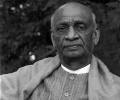
'Sardar Patel's actions must continue to inspire those who have worked for change today and those who aspire to alter the strangling status quo in our national life.'

Nehru decided to build The Ashok in New Delhi to host a UNESCO conference. For a prime minister focussed on India building with projects like the Bhakra-Nangal Dam, IITs and factories, "the hotel spoke of the gumption of the country at that time." Manavi Kapur traces the eventful journey of the hotel, which has now completed 60 years.

'The origins of the model of planned economic development adopted by independent India was a direct consequence of the war.' 'The war provided an opportunity for groups at the margins of Indian society to find new avenues for mobility.' 'The war also led to the emergence of India as a major Asian power and set the stage for it to play a wider role in international politics.'
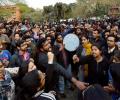
The State is trying to curb the students movements, therefore, there are suspicions against some of the Subramanian report on education's recommendations, says Mohammad Sajjad.
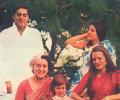
'I do not think Rajiv Gandhi at that stage had any influence on his mother. Indira Gandhi relied totally on Sanjay and she looked upon him as a dependable son.' 'What really affected people and eventually Indira Gandhi was the sterilisation drive. She lost so badly in north India because of these drives.' 'She is the one who has given this aura of 'the family' to the Gandhis.' The second and final part of veteran journalist Coomi Kapoor, whose book The Emergency: A Personal Account was published recently, to Sheela Bhatt/Rediff.com about Independent India's darkest phase.
 © 2026 Rediff.com - Advertise with us - Disclaimer - Privacy Policy - Sitemap - Feedback - About us - Terms of use - Grievances